
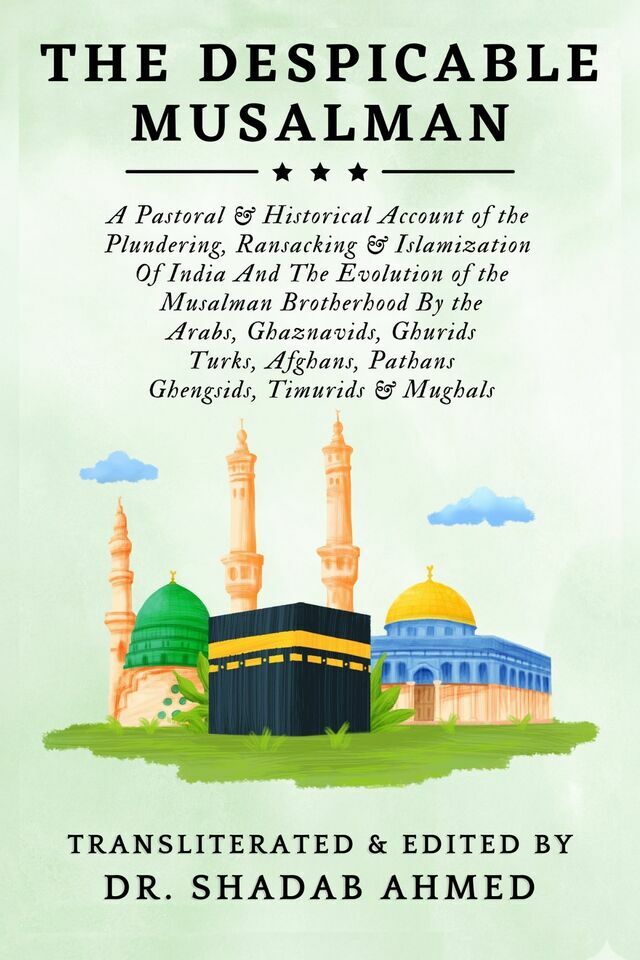
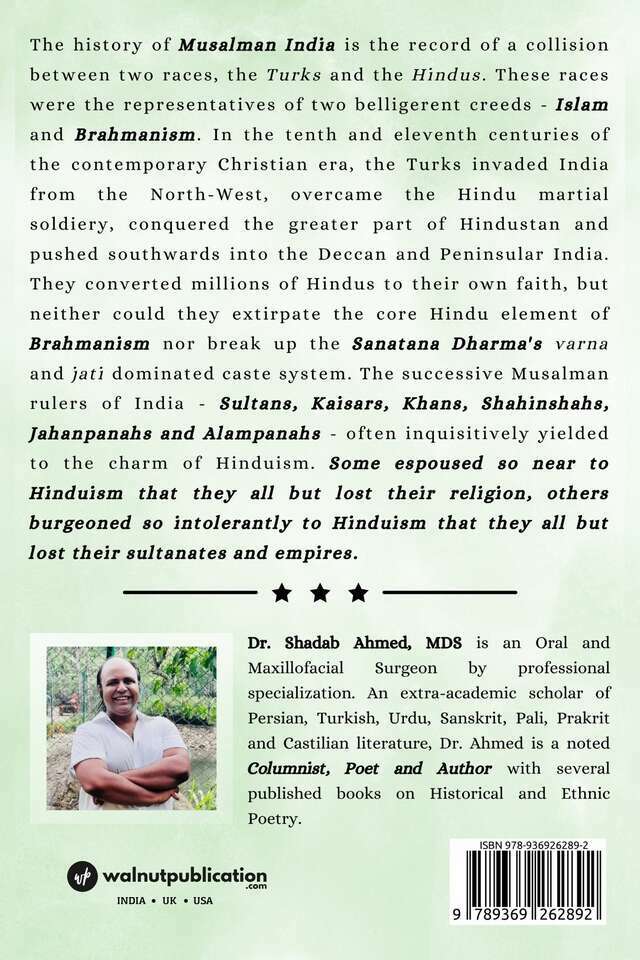


The history of Muslim India reflects a long and complex encounter between two civilizations represented by the Turks and the Hindus, and by the belief systems of Islam and Brahmanism. From the tenth century onward, Turkish invasions reshaped the political landscape of India, leading to widespread conquests and religious conversions. Yet, despite these transformations, the core structure of Sanatana Dharma and its varna–jati based social order remained largely intact. Successive Muslim rulers displayed contrasting responses to Hinduism—some drawn toward its philosophy and culture, others fiercely opposed to it shaping the rise and fall of their own empires.