

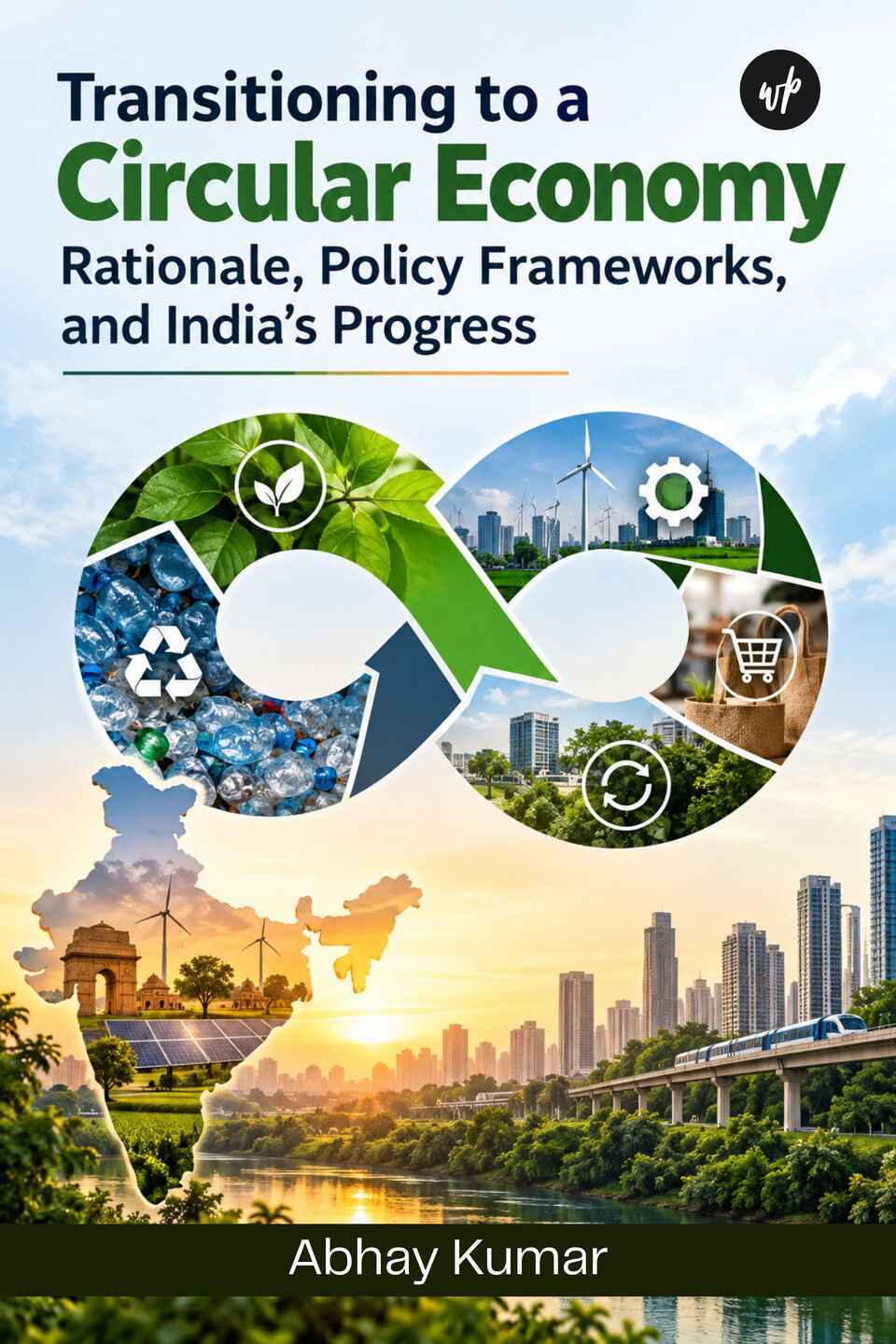
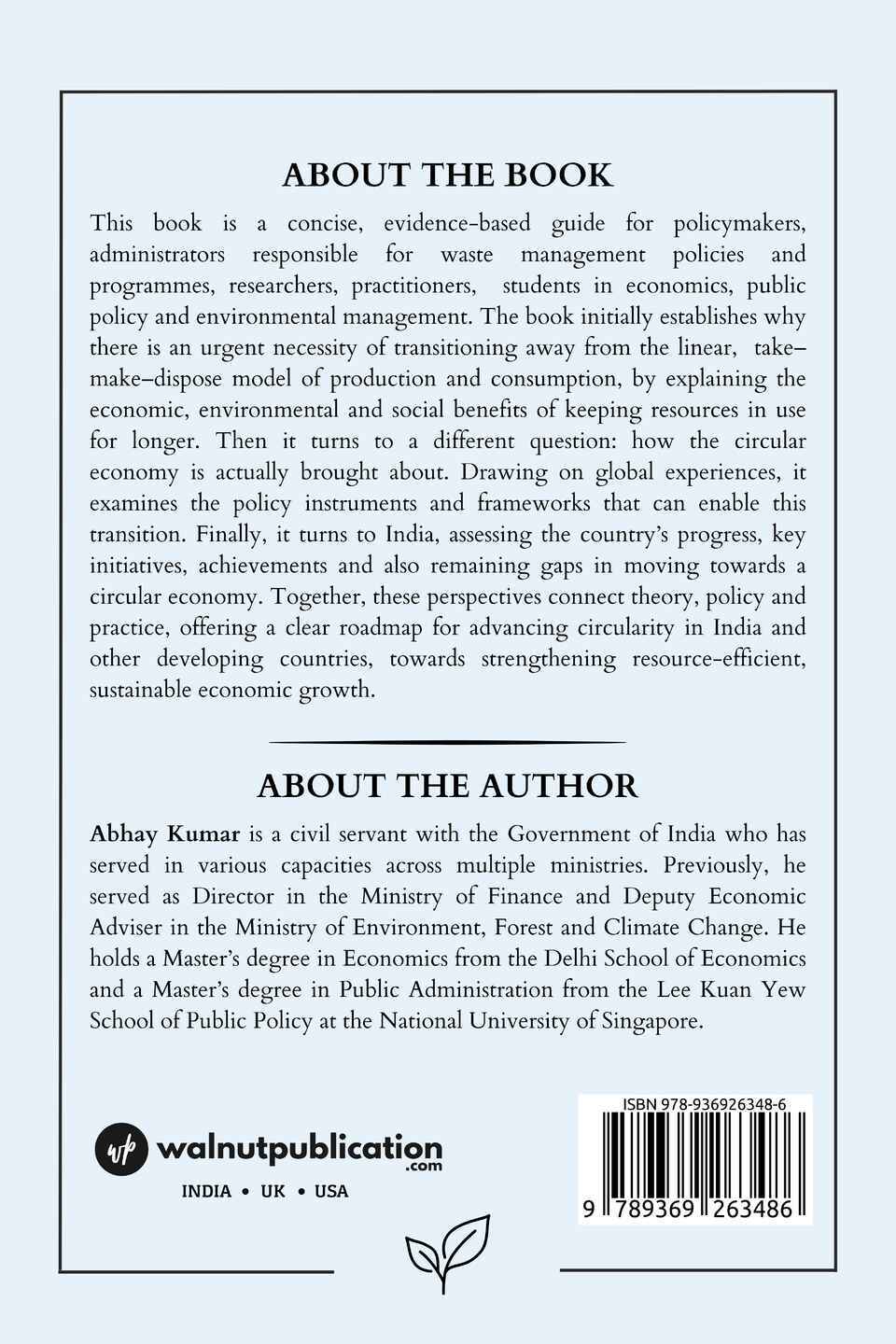
This book is a concise, evidence-based guide for policymakers, administrators responsible for waste management policies and programmes, researchers, practitioners, and students of economics, public policy, and environmental management. The book begins by establishing the urgent need to transition away from the linear “take–make–dispose” model of production and consumption, explaining the economic, environmental, and social benefits of keeping resources in use for longer. It then addresses a different question: how can a circular economy actually be achieved? Drawing on global experiences, it examines the policy instruments and frameworks that can enable this transition. Finally, the book focuses on India, assessing the country’s progress, key initiatives, achievements, and remaining gaps in moving towards a circular economy. Together, these perspectives connect theory, policy, and practice, offering a clear roadmap for advancing circularity in India and other developing countries while strengthening resource-efficient and sustainable economic growth.


